The Long Now Blog


Ideas about Long-term Thinking    Blog Homepage   |   Subscribe in a reader


1,000 Years of Forgetting

December 15th, 02009 by Kevin Kelly

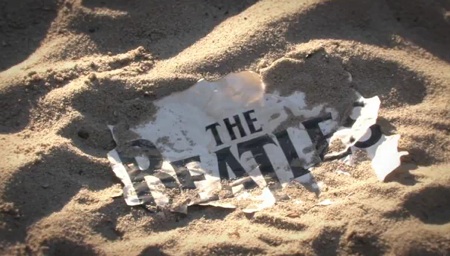
Beatles3000
One thousand years from now, much of what we know will be forgotten. That’s been true in the past. We have only a fragmentary cultural memory of what happened 1,000 years ago. And what we think we know about 1000 may in fact be quite garbled. In a very witty demo of this, this youtube clip, the Beatles 3000, imagines how corrupted our current ideas of “what everone knows” will most likely be in 10 centuries. Ever heard of the Beatles?  (Thanks, Mark)

This entry was posted on Tuesday, December 15th, 2009 at 4:50 pm and is filed under Digital Dark Age. You can follow any responses to this entry through the RSS 2.0 feed. You can skip to the end and leave a response. Pinging is currently not allowed.

5 Responses to “1,000 Years of Forgetting”

  1. Clayton Moraga Says:

    Posted on December 16th, 2009 at 5:03 pm

    1,000 years ago a palimpsest was created from a document created a 1,000 years earlier. Are we still inadvertently creating palimpsests today?

    http://www1.uni-hamburg.de/RV/areas.html

  2. Peter Yard Says:

    Posted on December 16th, 2009 at 8:14 pm

    I was discussing this very topic with my son the other day. We both have a love of science and history. I told him that very little of the past survives, he agreed citing what was known of Rome based on so few authors and how we regarded that culture as very well understood compared to the Mayans. If only the Library of Alexandria had not been lost, if the Mayan codices had not been burnt, and on and on.

    We can’t even capture the essence of a decade of our own culture from the last century much less 1,000 years ago. And we have lost so much art, writing in that time. We really need to leave nest eggs for future cultures … sort of how to grow civilisation kit. A list of common mistakes and reasonable solutions. If we leave a lot of such repositories, some obvious and some hidden, maybe a few of them will survive. And we will be remembered.

  3. Colin Meier Says:

    Posted on December 17th, 2009 at 10:46 pm

    Peter, that assumes *we* know how to “grow civilization”. The very idea that we need to leave those nest eggs presupposes (as far as I can see) that we don’t, because, you seem to be saying, our own won’t survive.

    The other side of this coin is that it’s very difficult to write history as it’s happening. Only after a hundred years or more are we able to see what was truly important. Of course, it’s never possible to have too *much* information.

    I’m not at all against the idea of leaving such repositories, though…the novel I’m working on is based around just such a concept.

  4. Peter Yard Says:

    Posted on December 31st, 2009 at 2:14 pm

    Colin, I would agree we are having problems managing our current global, industrial civilisation. But I think we could offer some good advice in how to grow a pre-industrial civilisation, and what to avoid when becoming industrial. We have learned a lot of lessons, we could pass those on so the problems don’t hit our descendants without warning.

  5. Richard S Says:

    Posted on January 4th, 2010 at 11:17 am

    If you don’t limit yourself to athiestic models of the world.

    Both the Bible and the Book of Mormon represent books of how to build a civilization.
    Along with the mistakes made by people.

    “The Book of Mofmon” tells of the rise and falls of several civilizaions and some of the main causes. If you read them there are some very valuable lifes lessons.

Leave a Comment

Some Rights Reserved (CC)

The Long Now Foundation
Fostering Long-term Responsibility
est. 01996.